
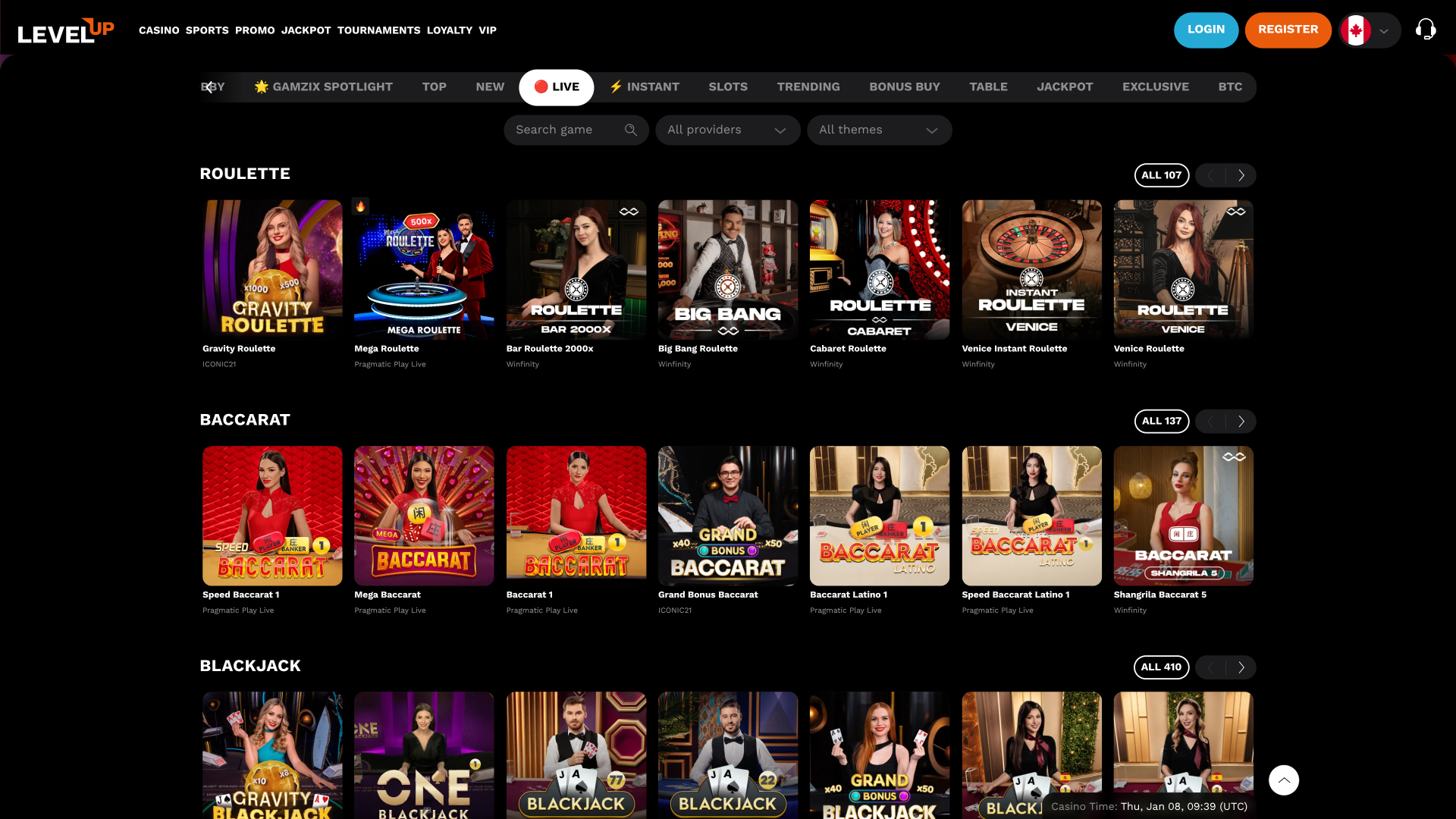

I previously assume problem gambling meant dramatic losses or financial ruin, but I’ve realized that the earliest signs are far quieter. As someone who values the entertainment casino level up provides, I’ve become much better at detecting when a harmless hobby starts to slip. The immersive world of online slots and live dealer tables can blur the line between recreation and compulsion surprisingly fast. Living in Switzerland, where federal gambling legislation pushes operators to provide strong player protection tools, I’m thankful that Level Up Casino’s responsible gambling features let me set real boundaries. Here, I want to share the personal warning signals I now watch for and the steps I take to keep my play healthy, intentional and genuinely fun.
První Identifying Problem Gambling: The True Signs
Problem gambling doesn’t happen as one big crash; it’s a gradual erosion of control that often hides behind justification. I first noticed an rising fixation on my next play and a compulsion to win back small amounts immediately. Switzerland classifies the term “pathologisches Spielen” is defined as an impulse control disorder, and experts emphasise that the disorder can develop long before someone hits a financial bottom. I now know that trying to recover losses, spending more time gambling than planned, and becoming agitated when unable to access my account are initial warning signs. Level Up Casino’s responsible gambling page describes these behaviors in detail, and completing a truthful self-evaluation allowed me realize that my harmless fun was shifting into something emotionally driven. Spotting that change early gave me the chance to reset before the behaviour became deeply ingrained.
3. Economic Red Flags That Signal a Shift in Control
I once convinced myself my spending was okay because I didn’t miss bill payments, but I ignored smaller leaks. I started justifying a “final” deposit after my balance hit zero, and I’d mentally recast gambling losses as normal entertainment expenses even when they clearly exceeded what I’d comfortably spend on a dinner in Geneva. Those micro-decisions added up. When I finally examined my transaction history inside my Level Up Casino account, the monthly total was nearly forty percent higher than I’d estimated. The awakening was uncomfortable but crucial. Since then, I’ve handled every deposit like the price of a cinema ticket: once it’s gone, the experience is over. I also keep apart my gambling money from my household budget, which lets me spot any slow increase in spending before it becomes a fundamental problem.
5. Personal and Relational Cues That Something’s Wrong
When I started evading questions about my evening schedule or growing guarded when my partner looked at my screen, I knew something had shifted. Open communication is a fundamental value in our Swiss social circles, and I was quietly violating it. I’d call off a weekend hike in the Valais to remain at home with online roulette, and I’d understate how often I participated. That isolation creep is a typical danger signal. I resolved to involve my partner straight by disclosing my monthly loss limit, turning what was a concealed habit into something open. Now I have an accountability partner who doesn’t judge but just asks, “How did the week go?” If you find yourself creating alibis or feeling frustrated when someone asks about your gambling, it’s recommended taking a break and examining whether play is silently crowding out the people who matter most.
6) Tools I Use at Level Up Casino to Ensure Play Safe
When I finally acknowledged I needed guardrails, I found that Level Up Casino’s responsible gaming panel is remarkably straightforward. Under Swiss licensing rules, operators must provide players clear self-control tools, and here I can set deposit caps, loss limits, wager limits, session timers and cool-off breaks all from one screen. The dashboard took me less than three minutes to comprehend, and every limit I set applied instantly. I could also download my full betting and transaction history, which gave me a revealing but valuable overview. Rather than feeling restricted, I felt relieved because the decisions I made with a clear head were now protecting the version of me that might act impulsively later. These tools transformed gambling back into a planned activity instead of a reaction.
Deposit Limits, Loss Limits, and Wager Limits on One Screen
I now use three different caps in combination. My daily deposit limit holds casual slot sessions small, my weekly loss limit of one hundred francs matches what I’d spend on a night out in Lausanne, and my wager limit prevents me from scaling up bets after a lucky streak. The loss limit in particular has been a mental lifesaver because it compels me to stop even when I feel convinced the next spin will turn things around. All three limits reside on the same page inside my account, and I can adjust them lower whenever I like. Swiss regulation mandates that any request to raise a limit only takes effect after a twenty-four hour cooling-off period, which has prevented me from making a panicked change after a frustrating session more than once.
How I Establish a Weekly Loss Limit That Appears Right
I sat down on a peaceful Sunday, assessed what I could comfortably part with in seven days without stress, and chose CHF 150 as my highest weekly loss. Inside the responsible gambling tool, I chose the weekly loss limit option, typed the amount, and verified. The system instantly recognized the change and presented a distinct notification that attempting to lift the cap would be delayed by a full day. That small delay operates like a circuit breaker. Twice I’ve tried to boost the limit after a bad run, and by the time twenty-four hours elapsed, the urge had vanished and I maintained my starting boundary. If I at any point hit my loss cap mid-week, I log out and head for a walk along the Limmat, appreciative that the tool functions as my rational self when my emotions want otherwise.
8. Stepping Away: Timeouts and Self-Exclusion Explained
At times a simple limit doesn’t suffice, and I need total separation. Level Up Casino allows me to set a time-out for 24 hours, seven days or 30 days. While on a break, I cannot access my account, place any bets, or obtain promotional emails. I used a week-long pause after catching myself dwelling on games during client meetings, and that distance offered me sufficient clarity to recalibrate. The login screen just showed a gentle notice of my break, which felt helpful rather than negative. A break is the ideal middle ground when I notice my habits changing but I’m not in crisis territory.
If I ever need extended protection, I can apply for self-exclusion for half a year or beyond. This option is additionally linked to the state Swiss self-exclusion register, which means the ban can extend to all authorized gambling houses in the country. Level Up Casino’s support team helps me with the process, and when the exclusion kicks in, it’s final for the chosen period. I am aware of people who had a six-month break and came back with a significantly more balanced relationship to gaming. When self-exclusion is in effect, any try to register a new account with the identical personal details is stopped by the identity verification system, which provides an extra layer of safety when my own judgment might be unreliable.
4. The way Time Spent Gambling Turns into a Liability
I was honestly surprised how quickly a planned thirty-minute slot session would expand into two or three hours. The visual richness of the games at Level Up Casino made time feel flexible, and I’d skip my evening walk or postpone calls with friends simply to keep spinning. That troubled me because my quality of life was contracting around gambling. I activated the built-in reality check, which pops up a gentle reminder every forty minutes. That simple nudge breaks the trance and obliges me to consciously decide whether to continue. I also set a separate alarm on my phone so I’m not relying solely on the platform. If I find myself repeatedly overlooking the alert or bargaining for “just ten more minutes,” I recognise it as a strong sign that time has gained control over me.
7. Establishing Deposit Limits: An Actionable Walkthrough
Configuring a deposit limit on Level Up Casino is straightforwardly opening the responsible gaming section and selecting a daily, weekly or monthly cap. I began with a modest daily limit of twenty francs, as I wanted to have a quick slot session without the risk of unnecessary top-ups. The platform stops any deposit that would go over the ceiling, and lowering the limit takes effect immediately, so I can tighten things further if I recognise a stressful week ahead. I pair my deposit cap with a session timer to ensure I am not merely controlling money but additionally the window of time I spend. Given that putting these layered limits in place, I’ve observed I log in with a much clearer intention, and the post-session regret I previously carry into Monday mornings has faded completely.
The second The Emotional Warning Signs I Watch for When Playing
Mood shifts are often the earliest alarms I discovered to take seriously. I noticed I was increasingly using Level Up Casino’s tables to flee a hard workday in Zurich, believing a few successful hands would lift my mood. When losses occurred, my frustration lingered, making me snappy with people I cared about. The true red flag was the hollow feeling after a session—not just disappointment, but a subtle sense of shame I’d hide. Gambling had ended being enjoyable and started seeming like an emotional crutch. I now maintain a simple note on my phone where I jot down how I felt before and after playing. If the “after” column regularly shows tension, sorrow or a need for a rapid win to feel okay, I understand it’s time to reduce and use the break tools.
9. Where to Locate Professional Help in Switzerland
If my own boundaries ever fail and I believe I’ve surrendered the ability to stop, I know that Switzerland provides strong, confidential support. The SOS Spielsucht helpline at 0800 040 080 is complimentary and reachable 24/7 in German, French and Italian. For French-speaking residents, the Centre du Jeu Excessif in Lausanne delivers specialised counselling, while the Fachstelle Glücksspiel in Bern caters to the German-speaking community with therapy and prevention workshops. Having the phone number kept in my contacts makes routine the idea that reaching out is a marker of strength. Level Up Casino’s responsible gambling page displays direct links to these organisations so I never have to search alone in a moment of distress.
Self-help groups like Anonyme Spieler, the Swiss branch of Gamblers Anonymous, hold regular meetings in Zurich, Basel and Geneva. I’ve also bookmarked the self-assessment test on spielsucht.ch, which I take every few months as a personal check-in. Early intervention alters everything, and Swiss cantonal addiction services deliver family counselling if someone I love is struggling. The entire support ecosystem, combined with the mandatory player protection tools built into Swiss-licensed casinos, reassures me that I am not forced to fight problem gambling in isolation. Whether I require a brief conversation or long-term therapy, there are clear, compassionate paths waiting.
Recognising problem gambling isn’t about labelling myself; it’s about paying attention to small shifts before they harden into damaging routines. By staying alert to emotional, financial and social warning signs, and by using the limits, time-outs and exclusion tools that Level Up Casino provides in full compliance with Swiss law, I can maintain play in its rightful place as entertainment. And whenever the signals get louder than my own defences, Switzerland’s professional helplines and treatment centres present a way back that is at no cost, confidential and remarkably effective. The key is to initiate the conversation early, with myself and, if needed, with the people and resources that can help.